
 marketing@bonzermarketeers.com
 +91 85111 20764



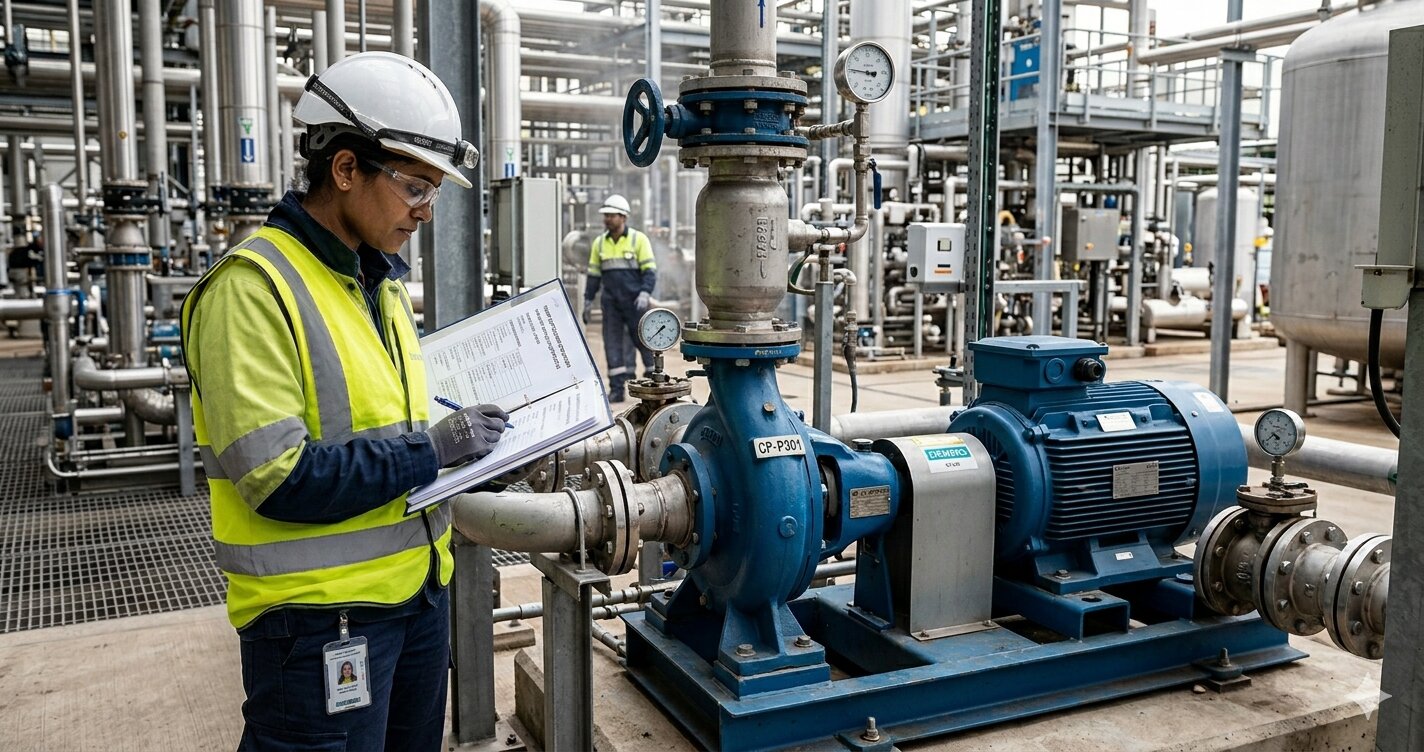
Imagine a pump fails within months of installation. Do you think this happened because the pump was cheap or proper maintenance was ignored? The actual cause is something else.
BONZER MARKETEERS find this pump failure pattern repeatedly across multiple sectors, such as chemical, pharma, paint, and in water treatment plants, where even skilled professionals fail to define the pump specification parameters accurately.
Result? Unexpected downtime, rising energy costs, and frequent maintenance issues. This article shows the top 10 key parameters every engineer must define before raising a purchase order and delivering a top-notch product.
Why Getting the Pump Specification Right Matters More Than the Pump Itself
In multiple industrial environments, a pump can show the best outcome when the specification behind it is accurate. However, even the best-designed pump sometimes fails or underperforms due to incomplete or incorrect data. This is why accurate pump selection for industrial applications is a vital aspect from the very start.
Here’s what research and the latest industry data consistently show:
1. Oversizing Leads to Massive Energy Losses
Pumps operating away from their Best Efficiency Point (BEP) consume a vast amount of over-power. It also causes -
Higher vibration
Increased heat generation
Reduced mechanical life
Pumping systems account for 25% to 50% of total energy usage in industrial plants. Also, a documented case study from an industrial pumping system revealed that an incorrectly sized pump operating far from its Best Efficiency Point ( BEP) has actually resulted in over $157,000 annually. This also turned out to be a huge waste in the case of electricity, purely due to oversizing and throttling losses.
2. Most Pumps Are Incorrectly Sized
Near around 80% of pump motors are estimated to be incorrectly sized. This huge number also leaves a strong impact
The majority of pumps are over-specified by almost 10–15%
Pumps contribute to nearly 30% of a plant’s total energy consumption
Even small sizing errors within the pumps turn into continuous operational costs, not one-time mistakes
3. Hidden Costs Multiply Over Time
Poor pump selection criteria also creates multiple expenses in a chain, not just a one-time expense.
Energy waste can reach up to 2–3 times higher than the pump’s annual purchase cost
Maintenance costs of these pumps often increase up to 200–400%, and that is due to the wrong specification of the pump
Furthermore, frequent issues like seal failures, vibration, and system inefficiencies arise with time.
Moreover, the correct pump selection for industrial applications matters a lot, and the right parameters need to be assessed well.
Flow Rate Requirement: One of the Prime Pump Specification Parameters
Flow rate actually defines how much liquid the pump must move, typically expressed in LPM or m³/hr. However, this directly impacts the accurate pump sizing, motor selection, and also the overall system performance.
Define normal operating flow and peak demand conditions
Account for proper process variations, parallel lines, or batch operations
Avoid undersizing because it affects production loss, and oversizing, which, on the other hand, leads to energy waste
Include at least 20% design margin for future expansion
According to a 2025 research, energy consumption is one of the most critical factors in pump selection because it directly affects both operational cost and sustainability.
A well-defined flow rate comes under the best pump selection criteria and creates a strong foundation that ensures long-term efficiency and greater scalability.
Total Head / Pressure Requirement
The total head or pressure requirement actually represents the resistance the pump must overcome. However, this is one of the most miscalculated aspects among the pump datasheet parameters.
Total dynamic head shows static head, friction losses, and also the significant discharge pressure
Always calculate under worst-case conditions
Validate against the pump’s overall performance curve
Avoid stacking for safety margins
A 2025 energy study also shows that only about 42% of fluid energy is effectively converted into useful work. Similarly, a significant portion is lost due to certain inefficiencies in the system design and during operation.
Furthermore, accurate head calculation also ensures efficient business operation while preventing unnecessary energy loss.
Fluid Type and Chemical Compatibility
The fluid is also being handled, which dictates almost every aspect of pump selection, and it is another key parameter to the pump selection criteria.
Identify whether the fluid is corrosive, abrasive, or neutral
Review the proper chemical composition and concentration levels
Cross-check compatibility with different material resistance charts
Consider the solids content and the particle size
All these factors significantly affect seal life, internal clearances, and also long-term reliability in the case of continuous process environments.
Correct fluid assessment also prevents the chances of material failure while ensuring long-term reliability, especially in Chemical Transfer Pump and pharmaceutical applications.
Fluid Temperature
Fluid temperature also plays a critical role in seal life and proper material integrity. Hence, it is considered essential in the case of any industrial pump specification guide.
Standard elastomers (Nitrile/EPDM) are unsuitable above ~80°C
Use Viton or PTFE for all the higher temperature ranges
Specify both operating and maximum temperatures
Account for thermal cycling, such as CIP/SIP processes
Ignoring the temperature limits often leads to seal degradation and also unexpected downtime in process industries.
Viscosity of the Liquid
Viscosity significantly affects the overall pump performance, and it is considered key when deciding how to select right industrial pump.
Always specify viscosity in centipoise (cP) at different operating temperatures.
Low viscosity suits different centrifugal pumps.
High viscosity, for example, polymers 500–5000 cP, requires positive displacement pumps.
Higher viscosity shifts pump curves while increasing power demand
Furthermore, fluids may behave differently during startup versus the pump’s steady-state. This also strongly impacts flow consistency and motor loading. Furthermore, the correct viscosity of the fluid also ensures a stable flow while preventing the chances of efficiency losses.
NPSH – Net Positive Suction Head: One of the Vital Aspects of Pump Specification Parameters
NPSH is one of the most critical yet frequently overlooked pump specification parameters. This is directly linked to cavitation risk.
Ensure NPSHa > NPSHr by at least 0.5–1.0 m
Apply the proper margin 1.2× to 2.5× NPSHr since the curves show NPSH3
Evaluate different conditions, such as low tank level, high temperature, and startup
Cavitation Insights
Cavitation typically occurs when local pressure drops below the liquid’s vapour pressure. This forms vapour bubbles, and those collapse violently inside the pump. This cycle leads to:
Erosion and Impeller pitting
Noise and vibration
Loss of flow and accurate pressure
Rapid mechanical failure
Industry data also shows that over 50% of cavitation-related failures are caused by poor suction system design, not pump defects.
Factor | Impact On NPSH |
|---|---|
High temperature | Reduces NPSHa |
Long suction piping | Increases losses |
Low tank level | Reduces the suction head |
High viscosity fluids | Increases suction losses |
If you consider two applications:
Water transfer 1 cP, which reflects low viscosity, minimal suction losses, and also easier to maintain NPSH margin
Polymer transfer where 500–5000 cP reflects high viscosity increases friction losses in suction piping, reducing NPSHa significantly
In the second case, even if flow and head are correctly defined, ignoring viscosity on NPSH can lead to immediate cavitation and also severe pump failure.
Hence, proper NPSH evaluation is not optional; it shows the main difference between pumps that run for years and those that fail within months.
Material of Construction
Material selection must be defined clearly in the pump technical specification sheet for each component.
Cast Iron for general water applications
SS316 for chemical, pharma, food-grade
Polypropylene for acids and alkalis
PTFE-lined for all the aggressive chemicals
Hastelloy for the ultra-corrosive environments
Also consider the accurate mechanical strength, erosion resistance, and proper compliance with industry standards (FDA, ATEX, etc.). Furthermore, incorrect material choice also leads to rapid corrosion or even certain contamination issues.
Therefore, selecting the right materials ensures greater durability, safety, and compliance in different demanding industrial conditions.
Pump Type Selection
Choosing the right pump type is also a key step in the pump selection checklist. However, the results actually differ based on fluid and process requirements.
Pump Type | Best Use Case |
|---|---|
Centrifugal | High flow, low viscosity |
AODD | Corrosive, abrasive fluids |
Gear Pump | High viscosity liquids |
Chemical Pumps | Aggressive chemicals |
Match the accurate pump design to fluid characteristics
Consider solids for handling, safety, and efficiency
Also evaluate pulsation requirements, shear sensitivity, and dosing accuracy. Incorrect pump type selection can also result in serious unstable flow, along with increased maintenance frequency.
Selecting the correct pump type also ensures optimal performance while reducing the chances of long-term operational issues.
Duty Cycle and Operating Environment
Duty conditions strongly define how a pump actually performs over time and must also be included in any new pump specification checklist. It also strongly shows -
Continuous duty that usually requires higher-grade bearings and proper insulation
Intermittent duty, which allows proper and standard configurations
Outdoor use, where both IP55 and proper protection help with complete UV resistance
Hazardous zones require ATEX-certified equipment
Also, there are certain factors in ambient temperature, high humidity, and significant exposure to chemicals or dust. These conditions significantly influence the motor life and overall system reliability.
Maintenance Accessibility and Spare Parts Availability
Maintenance considerations are also another critical factor in any industrial pump specification guide.
It ensures easy access for seal and component replacement
Verify the availability of different local spare parts
Check if in-house teams can perform the proper maintenance
Plan for standby pumps in certain critical operations
Also consider the mean time to repair (MTTR) along with the availability of service support. Delays in maintenance or different spare parts can also lead to extended downtime and production losses.
A pump that cannot be easily maintained becomes a serious liability. Therefore, prioritising greater accessibility and spare availability also impacts sustained performance and minimal downtime.
FAQs
What is the most important parameter in pump specification design?
There isn’t any single “most important” parameter for the pump specification design, but rather a system-based decision. However, flow rate, total head, and NPSH are considered the most critical pillars. If any one of these turns out incorrect, the pump starts operating inefficiently or fails prematurely.
How do I calculate total head for a pump specification?
Total head, or Total Dynamic Head (TDH), is calculated by combining the actual resistance that the pump must overcome. This includes static head (height difference), friction losses in pipes and different fittings, and also the discharge pressure requirements. You should always calculate TDH under worst-case conditions so that you can have an idea of the maximum flow and system losses.
Why is NPSH important in pump selection?
NPSH is considered critical because it strongly determines whether the pump will operate without cavitation or not. If NPSHa (available) is lower than NPSHr (required), vapour bubbles form and collapse inside the pump. This also causes severe damage. This also leads to noise, vibration, reduced efficiency, and impeller erosion.
Which pump type is best for corrosive chemicals?
For corrosive chemicals, the best pump type depends on fluid properties. Some common options are AODD pumps, magnetic drive pumps, and chemical centrifugal pumps, which are made of materials such as polypropylene, PVDF, or PTFE. These pumps are also well designed to handle aggressive fluids safely without leakage.
How do I choose the right pump material?
Choosing the right material depends on proper chemical compatibility, temperature, and different operating conditions. Therefore, start by reviewing the fluid’s chemical composition and cross-check it with material resistance charts. You can see that SS316 is considered more suitable for many chemical applications, while PTFE-lined pumps are better for highly aggressive acids.
What happens if a pump is oversized?
As per the pump sizing guide, an oversized pump operates away from its Best Efficiency Point. This results in higher energy consumption, increased vibration, heat generation, and also reduced mechanical life. It also leads to serious throttling losses and unstable system performance. Over time, this increases both energy costs and maintenance expenses.
Conclusion
If the pump specification parameters are missed or incorrectly defined, even the best pump cannot perform reliably. Therefore, getting the specification correct before the final procurement is not ideal for good engineering, but a cost-effective decision you can make.
Need assistance in defining the right pump specification for your application? Connect with BONZER MARKETEERS’ technical team, and receive expert guidance, complete specification review, and reliable support, particularly tailored to your process needs.