Bonzer Marketeers supplies OEM-compatible AODD pump diaphragms in PTFE, EPDM, Buna-N, FKM, Santoprene and more - for Wilden, ARO, Sandpiper, Yamada and 12+ brands. Serving industrial buyers across India from Vadodara, Gujarat.
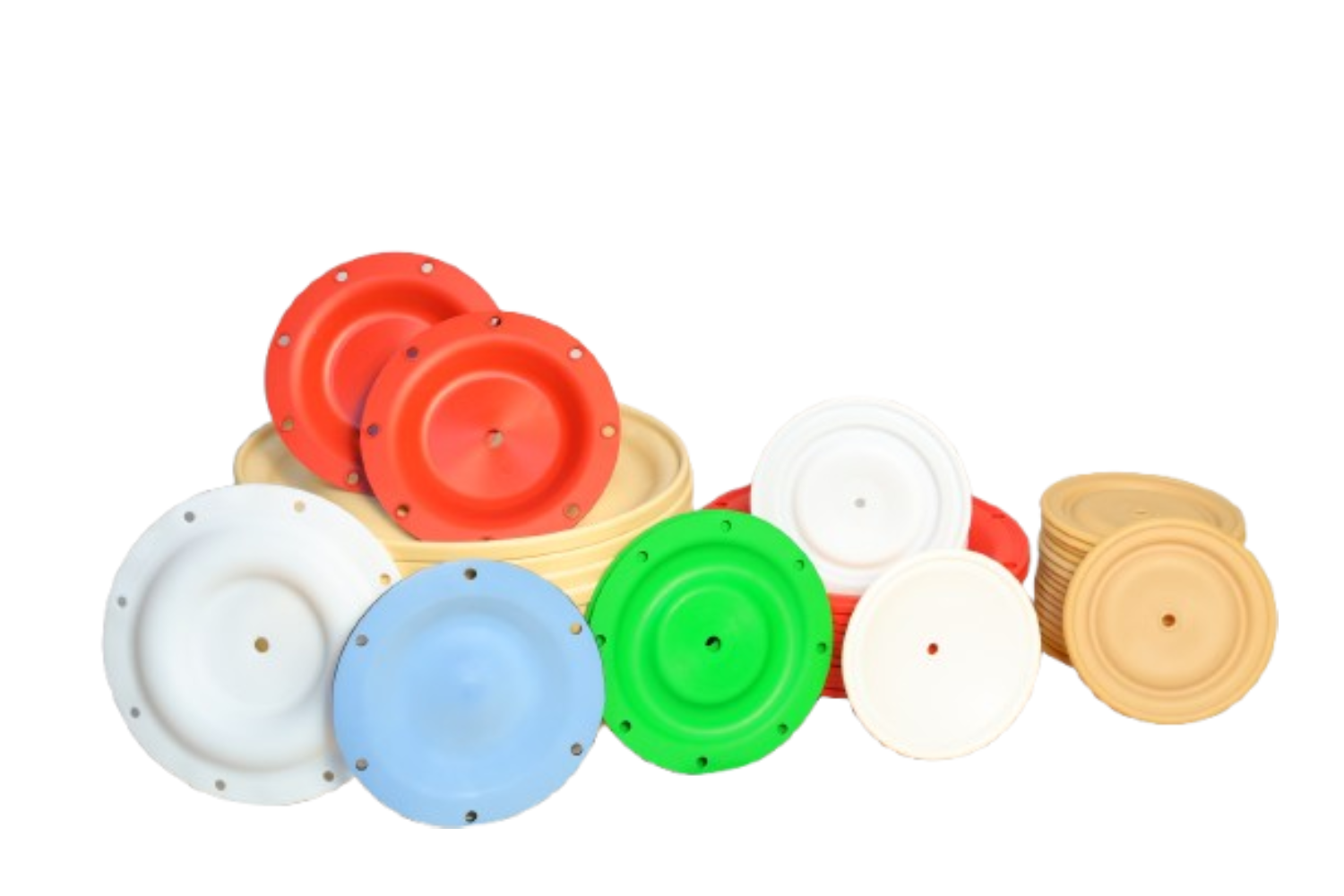
The diaphragm is the most critical wear component in any Air-Operated Double-Diaphragm (AODD) pump. It performs two essential functions simultaneously: creating the pumping action by flexing back and forth under compressed air and acting as a physical barrier between the air side and the process fluid. Without an intact, correctly matched diaphragm, the Air Diaphragm Pump cannot operate safely or efficiently.
Every AODD pump uses two diaphragms connected by a central shaft. As compressed air enters one side, the diaphragm strokes outward, pushing fluid from the liquid chamber towards the discharge. At the same time, the opposite diaphragm moves inward, drawing fluid through the inlet. This reciprocating motion continues automatically for as long as compressed air is supplied.
Because the diaphragms flex during every pump cycle often hundreds of thousands of times before replacement is required selecting the correct material, applying the proper installation torque and following a scheduled replacement programme are essential. These practices help maximise pump uptime and prevent process fluid from entering the air side of the pump.
Bonzer Marketeers stocks diaphragms in all standard elastomers and PTFE grades used across major AODD pump brands. Material selection should be based on chemical compatibility, operating temperature, and any food, pharma, or regulatory requirements for your application.
Best suited for petroleum-based fluids including fuel oils, mineral oils, non-synthetic hydraulic oils, turpentine, and kerosene. Widely used in oil & gas, automotive, and machinery industries. Operating range typically -12°C to 82°C.
Excellent for dilute acids, caustics, water-based fluids, and cold-temperature applications. A low-cost alternative for non-petroleum process fluids. Common in water treatment, food, and general chemical applications. Range: -51°C to 138°C.
The most chemically inert diaphragm material available. Handles aggressive acids (H₂SO₄, HCl), chlorinated solvents, ketones, and acetates. Available in solid PTFE or as a composite (PTFE face over rubber backer) for improved flex life. Range: 4°C to 104°C (standard); up to 149°C on smaller sizes.
Outstanding resistance to high temperatures (up to 177°C) and aggressive chemicals including aromatic hydrocarbons, chlorinated compounds, and concentrated acids. Preferred where PTFE cannot achieve sufficient suction lift or flex life. Range: -40°C to 177°C.
A cost-effective alternative to PTFE in many acidic and caustic applications including sodium hydroxide, sulphuric acid, and hydrochloric acid. Excellent abrasion resistance and durability. Well-suited for paint, coatings, ceramics, and slurry transfer.
General-purpose elastomer for water-based slurries, mild process chemicals, and non-aggressive fluids. Good flex life at low cost. Suitable for general industrial duties where chemical aggressiveness is limited.
Exceptional flex life and durability for general-purpose, non-aggressive applications. Cost-effective for high-cycle applications where chemical resistance is not the primary concern. Common in paint, cosmetics, and general fluid transfer.
Provides oil resistance that matches or exceeds Buna-N, with improved abrasion resistance and durability. An excellent upgrade option for petroleum and oilfield applications where extended service life is needed. Range: -40°C to 82°C.
AODD pump diaphragms are available in three main construction types. The right type depends on the aggressiveness of the process fluid, operating temperature, and expected flex life requirements.
Single-piece elastomer construction in materials such as Buna-N, EPDM, Neoprene, FKM, and Santoprene. Excellent flex life, low cost, and suitable for a wide range of general industrial and chemical applications.
Solid PTFE construction offering the broadest chemical resistance of any diaphragm material. The preferred choice for highly corrosive acids, solvents, and regulated process fluids in pharma, chemical, and semiconductor applications.
A PTFE face bonded over a rubber backer (typically EPDM or Buna-N). Combines the chemical resistance of PTFE with the flex life and elasticity of rubber — making it the most widely used diaphragm type in demanding applications.
Diaphragm failure is the most common maintenance event in AODD pump operation. Catching it early prevents contamination, unplanned downtime, and damage to the air valve assembly. Watch for these warning signs:
The clearest sign of diaphragm failure. If fluid is visible at the air exhaust or muffler, the diaphragm has ruptured and process fluid is crossing into the air side. Shut down immediately and replace both diaphragms.
Compressed air bypassing through a pinhole or micro-crack in the diaphragm appears as air bubbles in the product flow. Common in early-stage diaphragm fatigue before full rupture.
A diaphragm that has stiffened, swollen, or partially delaminated (in composite types) cannot flex fully, reducing the effective stroke volume and overall pump output.
Physical damage on the diaphragm surface during a scheduled PM inspection is a strong indicator of chemical attack or mechanical fatigue. Replace immediately even if the pump is still running.
A severely deformed or delaminated diaphragm may allow the pump to cycle without transferring meaningful fluid pressure to the system. Check both diaphragms and centre plates during inspection.
A compromised diaphragm forces the pump to work harder for the same output, increasing compressed air consumption per unit of fluid moved — a measurable early warning sign before visual symptoms appear.
Always replace both diaphragms together, even if only one has failed. Diaphragms wear at similar rates due to identical duty cycles. Fitting one new diaphragm alongside a worn one creates an imbalanced pump that will fail again quickly.
AODD pump diaphragms are used wherever diaphragm pumps handle process fluids — which spans nearly every manufacturing and processing sector in India. Bonzer Marketeers supplies diaphragm replacements across chemical processing, pharmaceuticals, food & beverage, paints & coatings, oil & gas, and water treatment plants. We also serve buyers in ceramics & mining, textile dyeing, printing & inks, pulp & paper, automotive, semiconductor manufacturing, adhesives, and steel & metal processing — covering the full breadth of industries where AODD pumps are deployed in Indian process plants.
The diaphragm serves two functions: it creates the reciprocating pumping action by flexing under compressed air, and it acts as a barrier between the air side and the process fluid. A ruptured or worn diaphragm allows fluid to cross into the air system, causing contamination and potential air valve damage.
Rubber diaphragms (Buna-N, EPDM, FKM, etc.) offer excellent flex life and are cost-effective for most industrial fluids. PTFE diaphragms provide the highest chemical resistance but have lower flex life compared to rubber. Composite diaphragms combine a PTFE face bonded over a rubber backer — giving you chemical resistance of PTFE with the flexibility and durability of rubber. Composite is the most commonly specified type in demanding chemical and pharmaceutical applications.
Replacement frequency depends on the pump's duty cycle, the process fluid, and the diaphragm material. As a general guide, diaphragms should be inspected at every scheduled preventive maintenance interval and replaced at the first sign of cracking, swelling, blistering, or delamination. For continuous-duty pumps handling aggressive fluids, proactive scheduled replacement is more cost-effective than waiting for a failure.
For most chemical processing applications, PTFE or composite PTFE diaphragms are the preferred choice due to their broad chemical compatibility. For specific fluids, EPDM suits dilute acids and alkalis, Buna-N suits petroleum-based fluids, and FKM suits high-temperature and highly aggressive chemical duties. Our team can help confirm the right material for your specific process fluid and operating conditions.
Yes. Bonzer Marketeers supplies OEM-compatible Wilden diaphragm replacements across India. We also stock compatible diaphragms for ARO, Sandpiper, Yamada, Graco, and other leading AODD pump brands. Share your pump model number and size and we'll confirm availability and pricing within one business day.
Yes — always replace both diaphragms together. Both diaphragms operate at the same duty cycle and wear at similar rates. Replacing only the failed diaphragm leaves a worn unit on the opposite side that is likely to fail shortly after, doubling your downtime and labour costs.
We stock diaphragms for common AODD pump sizes from ¼" to 3" across multiple brands and materials. For less common sizes or specific OEM part numbers, contact us and we will advise on availability and lead time.
Share your pump details — we'll match the exact part you need.

 admin@bonzermarketeers.com
 +918799573034